
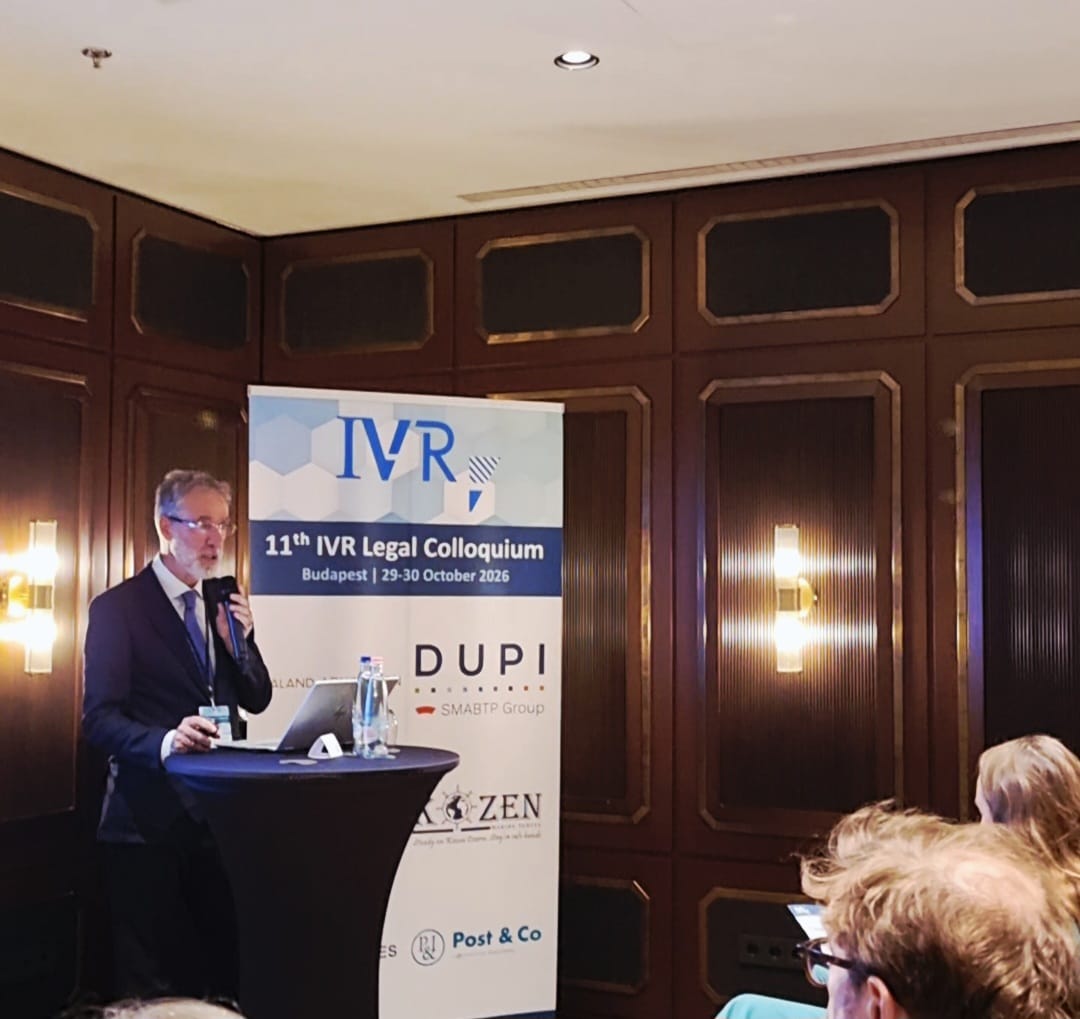
Arrest and forced sale of inland navigation vessels. This was the topic focused by Massimiliano Grimaldi during the 11th IVR Legal Colloquium in Budapest (29-30 October 2026). Specifically, Massimiliano Grimaldi gave an overview on the international regulations applicable in the event that an inland navigation vessel allides with a bridge or a port infrastructure located in a country other than the vessel’s flag country. This subject is disciplined by the International convention on the registration of inland navigation vessels concluded in 1965 and entered into force in 1982, composed of 25 articles and two Protocols. In particular, Protocol 2 disciplines the attachment and forced sale of inland navigation vessels: requisites to obtain the judicial authorization for the arrest of a vessels; conditions to obtain the release of the vessel; etc). Massimiliano Grimaldi also focused on the right for the shipowner or the insurer to limit the liability on the basis of CLNI 2012.
For more details please contact us at gsl@grimaldistudiolegale.com
Massimiliano Grimaldi is the author of the book Inland Water Transport. The European Legal Framework, published in 2023 by Routledge in London.
This book analyses the European legal framework on inland water transport and how the main Member States of Central Western Europe implemented it.
Specifically, the book provides an innovative tool of analytical and systematic study of the various legislative EU measures that regulate the inland waterways transport sector, as well as for the comparative study and analysis of the relevant measures of implementation adopted by the afore-mentioned Member States. Each EU legislative measure is first explained in general terms and then commented on in detail with a specific analysis of the most significant articles, following a precise logical sequence of the topics; the corresponding national implementing measures are also examined in detail describing any different ways of transposing the EU regulation, also with regard to any differences in approach by the Member States relative to the possibility of any derogations or exemptions from compliance with some measures, which is often provided for by the EU regulation. This approach is significantly useful for (i) a more systematic and user-friendly understanding of the EU regulatory framework, (ii) an equally better understanding of how EU measures have been transposed into national legislation and (iii) a revision of this European and domestic legislation, where appropriate.
Furthermore, the book is very useful for policy-makers of countries that are not members of the European Union (i.e. policy-makers from countries worldwide that have inland waterways), as they have a reference tool to evaluate the possibility of reviewing their own regulation with a view to making it more similar to the EU one should the latter be better.
While preparing the book, analyses of the preparatory work of the legislation played a great role, as they are very useful for better understanding the legislative initiatives and the reasons for the choices made. Analysis of the doctrine and jurisprudence also played a great part. This allows the reader to have a thorough understanding of the subject from a scientific point of view and from the point of view of practical application.