
by Grimaldi Studio Legale | Aug 18, 2025 | EU funding, infrastructures and logistics, European union law, Grimaldi Law Firm, space economy law
The new Italian law on the space economy, a great opportunity for space operators.
Law number 89 dated 13 June 2025 containing «Provisions on the Space Economy» came into force on 25 June 2025. This new law regulates access to outer space by space operators, as a strategic crossroads of geopolitical, economic, scientific, and military interests, and promotes investment in the new space economy in order to increase national competitiveness and foster scientific research, the development of space sector expertise, and the exploitation of new technologies related to Earth observation in the context of forecasting and preventing risks associated with natural and anthropogenic phenomena.
Specifically, the aforementioned law promotes the launch, release, in-orbit management, and reentry of space objects, including the disposal from Earth orbit and the removal of objects, in-orbit services, the assembly and operation of orbiting space stations, and the production of objects in outer space and on celestial bodies; the exploration, extraction, and use of natural resources in outer space and on celestial bodies, in accordance with internationally adopted legal instruments; the launch, flight, and short- or long-term residence of living beings in outer space and on celestial bodies; activities conducted using stratospheric platforms and sounding rockets; and any other activities carried out in outer space and on celestial bodies by operators to whom this law applies.
This law also established the Space Economy Fund, which provides significant economic contributions to space operators who intend to make investments to achieve the objectives established by the same law.
For further information please contact us at gsl@grimaldistudiolegale.com

by Grimaldi Studio Legale | Sep 23, 2024 | European union law, Grimaldi Law Firm, Marina law, Ship finance, Yachting law
ITALIAN YACHTING CODE. NEW IMPLEMENTING RULES
On the Gazzetta Ufficiale n. 222 dated 21st September 2024 – Supplemento Ordinario n. 35 – was published Decree n. 133/2024, which introduces new and important rules for the implementation of the Italian Yachting Code. The new decree consists of 101 articles and it will enter into force within 30 days starting from 17th September 2024.
For any legal advice or assistance please contact us at gsl@grimaldistudiolegale.com
https://www.grimaldistudiolegale.com/en/yachting-law-yachts-superyachts/

by Grimaldi Studio Legale | Jul 23, 2023 | Competition, antitrust and state aid, EU funding, infrastructures and logistics, European union law, Grimaldi Law Firm, Law of inland navigation and for tidal waters, Ship finance
VIENNA 5-6 OCTOBER 2023, INTERNATIONAL LEGAL COLLOQUIUM ON INLAND WATER TRANSPORT
IVR has organised the 10th edition of the IVR International Legal Colloquium on Inland Water Transport in Vienna on 5 and 6 October 2023, with the aim of promoting the implementation of international conventions and recommendations of international conditions and transport documents. During this colloquium, various legal professionals from its network will give presentations on current issues in inland shipping law.
Click on the photo to read the Program.

by Grimaldi Studio Legale | Jul 23, 2021 | EU funding, infrastructures and logistics, European union law, Grimaldi Law Firm
CONNECTING EUROPE FACILITY (CEF) – GRANTS 2021-2027
The Regulation (EU) 2021/1153 establishing the Connecting Europe Facility (CEF) for the period 2021-2027 was formally adopted earlier this month. The Regulation lays down the objectives of the CEF, its budget for the 2021-2027 period, the forms of Union funding and the rules for providing such funding. It also repeals Regulation (EU) 1316/2013 and Regulation (EU) 283/2014. The new rules apply retroactively as of 1 January 2021.
CEF 2021-2027 is aimed at supporting investment in key projects in the areas of transport, digital and energy infrastructure with an overall budget of €33.71 billion.
The budgets for each sector are:
- transport: €25.81 billion (including €11.29 billion for cohesion countries)
- energy: €5.84 billion
- digital: €2.07 billion
TRANSPORT
In the transport sector, only the following actions shall be eligible to receive Union financial support under this Regulation:
| (a) |
actions relating to efficient, interconnected, interoperable and multimodal networks for the development of railway, road, inland waterway and maritime infrastructure: |
| (i) |
actions implementing the core network in accordance with Chapter III of Regulation (EU) No 1315/2013, including actions relating to cross-border links and missing links, such as those listed in Part III of the Annex to this Regulation, as well as urban nodes, multimodal logistics platforms, maritime ports, inland ports, rail-road terminals and connections to airports of the core network as defined in Annex II to Regulation (EU) No 1315/2013; actions implementing the core network may include related elements located on the comprehensive network when necessary to optimise the investment and according to modalities specified in the work programmes referred to in Article 20 of this Regulation; |
| (ii) |
actions relating to cross-border links of the comprehensive network in accordance with Chapter II of Regulation (EU) No 1315/2013, such as those listed in Part III, point 2, of the Annex to this Regulation, actions referred to in Part III, point 3, of the Annex to this Regulation, actions relating to studies for the development of the comprehensive network and actions relating to maritime and inland ports of the comprehensive network in accordance with Chapter II of Regulation (EU) No 1315/2013; |
| (iii) |
actions to re-establish missing regional cross-border rail connections on the TEN-T that have been abandoned or dismantled; |
| (iv) |
actions implementing sections of the comprehensive network located in outermost regions in accordance with Chapter II of Regulation (EU) No 1315/2013, including actions relating to the relevant urban nodes, maritime ports, inland ports, rail-road terminals, connections to airports and multimodal logistics platforms, of the comprehensive network as defined in Annex II to Regulation (EU) No 1315/2013; |
| (v) |
actions supporting projects of common interest in order to connect the trans-European network with infrastructure networks of neighbouring countries as defined in Article 8(1) of Regulation (EU) No 1315/2013; |
| (b) |
actions relating to smart, interoperable, sustainable, multimodal, inclusive, accessible, safe and secure mobility: |
| (i) |
actions supporting motorways of the sea as provided for in Article 21 of Regulation (EU) No 1315/2013 with a focus on cross-border short-sea shipping; |
| (ii) |
actions supporting telematic applications systems in accordance with Article 31 of Regulation (EU) No 1315/2013, for the respective modes of transport, including in particular: |
| — |
for inland waterways: River Information Services (RIS), |
| — |
for road transport: Intelligent Transport Systems (ITS), |
| — |
for maritime transport: Vessel Traffic Monitoring and Information Systems (VTMIS) and e-Maritime services, including single-window services such as the maritime single window, port community systems and relevant customs information systems, |
| — |
for air transport: air traffic management systems, in particular those resulting from the Single European Sky ATM Research (SESAR) system; |
| (iii) |
actions supporting sustainable freight transport services in accordance with Article 32 of Regulation (EU) No 1315/2013 and actions to reduce rail freight noise; |
| (iv) |
actions supporting new technologies and innovation, including automation, enhanced transport services, modal integration and alternative fuels infrastructure for all modes of transport in accordance with Article 33 of Regulation (EU) No 1315/2013; |
| (v) |
actions to remove barriers to interoperability as defined in Article 3, point (o), of Regulation (EU) No 1315/2013, notably barriers when delivering corridor/network effects, including actions promoting an increase in rail freight traffic and automatic gauge-change facilities; |
| (vi) |
actions to remove barriers to interoperability, in particular in urban nodes within the meaning of Article 30 of Regulation (EU) No 1315/2013; |
| (vii) |
actions implementing safe and secure infrastructure and mobility, including road safety, in accordance with Article 34 of Regulation (EU) No 1315/2013; |
| (viii) |
actions improving transport infrastructure resilience, in particular its resilience to climate change and natural disasters and to cyber security threats; |
| (ix) |
actions improving transport infrastructure accessibility in all modes of transport and for all users, especially users with reduced mobility, in accordance with Article 37 of Regulation (EU) No 1315/2013; |
| (x) |
actions improving transport infrastructure accessibility and availability for security and civil protection purposes and actions adapting the transport infrastructure for Union external border checks purposes with the aim of facilitating traffic flows; |
| (c) |
under the specific objective referred to in Article 3(2), point (a)(ii), and in accordance with Article 12, actions or specific activities within an action, supporting parts, new or existing, of the TEN-T suitable for military transport, in order to adapt the TEN-T to dual-use infrastructure requirements. |
ENERGY
In the energy sector, only the following actions shall be eligible to receive Union financial support under this Regulation:
| (a) |
actions relating to projects of common interest as set out at Article 14 of Regulation (EU) No 347/2013; |
| (b) |
actions supporting cross-border projects in the field of renewable energy, including innovative solutions, as well as storage of renewable energy, and their conception, as defined in Part IV of the Annex, subject to the fulfilment of the conditions laid down in Article 7. |
DIGITAL
In the digital sector, only the following actions shall be eligible to receive Union financial support under this Regulation:
| (a) |
actions supporting the deployment of and access to very high capacity networks, including 5G systems, capable of providing Gigabit connectivity in areas where socioeconomic drivers are located; |
| (b) |
actions supporting the provision of very high-quality local wireless connectivity in local communities that is free of charge and without discriminatory conditions; |
| (c) |
actions implementing the uninterrupted coverage with 5G systems of all major transport paths, including the TEN-T, such as the actions listed in Part V, point 3, of the Annex; |
| (d) |
actions supporting the deployment of new or the significant upgrading of existing backbone networks, including submarine cables, within and between Member States and between the Union and third countries, such as the actions listed in Part V, point 3, of the Annex, as well as other actions supporting the deployment of backbone networks referred to in that point; |
| (e) |
actions implementing digital connectivity infrastructure requirements related to cross-border projects in the areas of transport or energy or supporting operational digital platforms directly associated to transport or energy infrastructures, or both. |
ELIGIBLE ENTITIES (https://www.grimaldistudiolegale.com/en/eu-funding-infrastructures-and-logistics/ )
The following entities shall be eligible:
| (a) |
legal entities established in: |
| (i) |
a Member State, including joint ventures; |
| (ii) |
a third country associated to the CEF; or |
| (iii) |
an overseas country or territory; |
| (b) |
legal entities created under Union law and, if provided for in the work programmes, international organisations. |
Natural persons shall not be eligible.
by Grimaldi Studio Legale | Feb 28, 2021 | Competition, antitrust and state aid, European union law, Grimaldi Law Firm, Law of inland navigation and for tidal waters, Maritime and insurance law
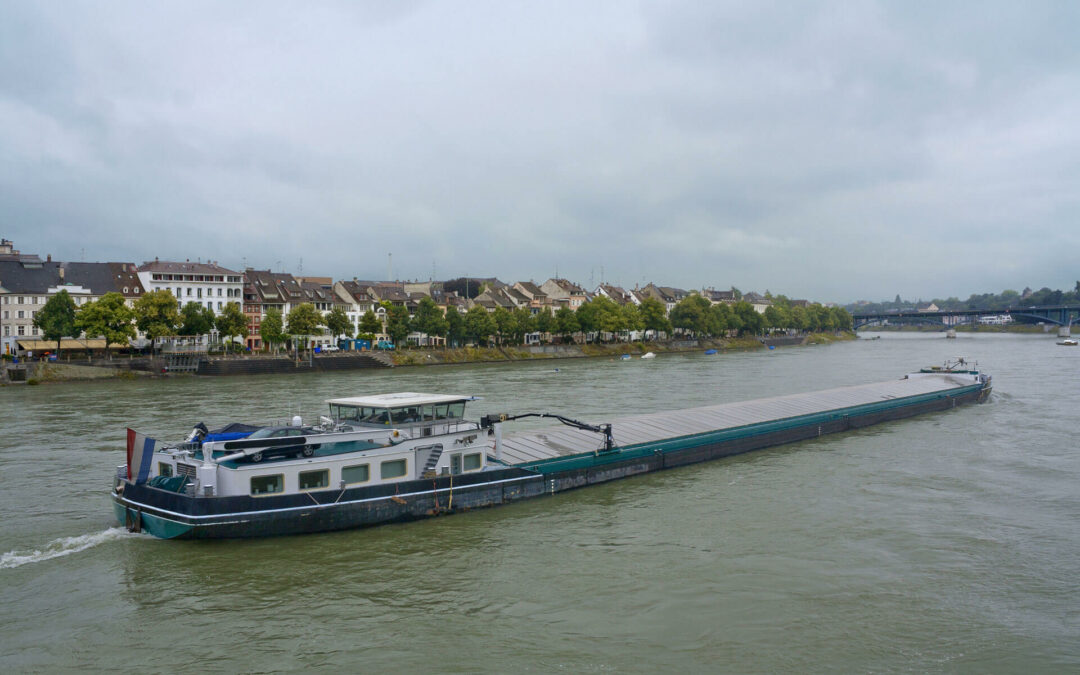
ITALY. INLAND WATER FREIGHT TRANSPORT
We (https://www.grimaldistudiolegale.com/en/law-of-inland-navigation-and-for-tidal-waters/) inform you that on the MIT – Directorate General for road and intermodal transport, on the page “Transparent Administration” under the heading “Grants, contributions, subsidies for economic benefits” and on the website of the manager RAM Spa Logistics, infrastructures and transport: www.ramspa.it , on the page “intermodal incentives”, the integral text of the decree of the Ministry of Infrastructures and transport of 29 October 2020 regarding “Interventions for the enhancement of freight transport via inland waterways and river-sea routes for the purpose of environmental improvement and development of more sustainable forms of freight transport” has been published.